
The Dapper Gentleman
FOOD & DRINK
Click one of the following links to learn more about the food and drink of the Dapper Gentleman
Beer
Beer begins with four basic ingredients, grain, water, yeast, and hops. The grain, whether it be barley, wheat, or a variety of others, is heated in water so that the starch within the grain is converted to sugars. Once the "sugar water" has reached a boil, hops, the flower of a hop vine, are added to provide a balncing bitter or floral taste to the sweetness from the leftover grain. Once the mixture is cooled, yeast is finally added. Yeast feeds off of the sugars acquired from the grain in the previous process and converts it to alcohol. This process is called fermentation
There is no correct method for brewing beer and slight variations can occur in each step. This is why there are so many flavors and styles of beer. Grains tend to give beer roasted and sweet flavors, while hops create bitter, floral, and citrusy characteristics. Finally, yeast adds earthy and bread like flavors. All of these can vary depending on the overall flavor the brewer would like the beer to have.
But how to decide what style of beer is right for you? Two helpful indicators to get you started on the taste certain beers might have are IBUY and the beer color. IBU stands for International Bittering Units. The higher IBU's a beer has, the more you will be able to taste the defining hop flavors or simply how bitter the beer will be. Color is also an easy visual indicatorto aid in determining the right beer. Lighter beers tend to showcase hops or wheat and tend to produce cleaner, fresher tastes. As you move down the spectra to darker beers, grain is showcased and tends to produce sweeter or toasty flavors, similar to coffee.
Pale Lager

For many, their first beer is a variety of pale lager because of its crisp, clean taste and popularity in the United States. A pale lager is what nearly every domestic beer is in the United States. From Budweiser to Coors, all are known as a pale lager. A genuine pale lager though, is characterized by its yellow and fizzy appearance and is also referred to as an "all malt" beer because it was brewed without adjuncts. These beers tend to display a depth of malt flavor and more complex bitterness vs. macro brewery adjunct counterparts.
Average alcohol by volume: 4.0%-6.0%
Average IBU's:5-20

Amber Ale
The amber ale can be a very broad category of beer encompassing many styles. Normally, amber ales focus on the malts but hops are not abnormal. Expect a well-balanced beer with toasty malts and a light fruitiness. The amber ale is a good introduction for many into the world of craft beer and perfect for just about any occasion.
Average alcohol by volume:4.0%-7.0%
Average IBU's: 15-35
Porter

Modern porters are brewed using malts that give chocolate, roasted, and smoked notes. Many may say porters have a burnt taste. Hop bitterness varies from porter to porter, but they are mainly used to balance intense malt notes. Expect a very complex and well balanced beer.
Average alcohol by volume: 4.0%-7.5%
Average IBU's: 20-60
American/Indian Pale Ale

This variety is known for its use of local ingredients, or imported, which produces different varieties in character depending on the region. Normally, it has a good balance of malt and hops. Characteristic flavors tend to be fruity with light to pungent floral notes from the hops. American versions give clean, crisp hoppy notes as opposed to British style IPA which tend to be more malty and aromatic. Average alcohol by volume:4.0%-7.0%. Average IBU's: 40+

Bock
This beer is known as a symbol of better times to come and moving away from winter. Bocks are a bottom fermenting lager. This makes the beer stronger than your normal lager, giving it a more robust malt flavor and dark amber to brown hue. Although some are hopped, it is abnormal to find one with assertive hop bitterness because it masks the characteristic malt.
Average alcohol by volume:5.5-7.5%
Average IBU's: 20-30
Stout

There are many varieties of stout ranging from milk to chocolate. Stout is the darkest in color of all the beers and is normally just variety of "heavy porter". Stouts exhibit similar characteristics to porters but most tend to be thicker in consistency. Many types of stouts are brewed with cream or milk which leaves a smoother, sweeter taste in the beer. Guiness is probably the most popular variety and provides a good example of what you may expect from a stout.
Average alcohol by volume: 4.0%-7.0%
Average IBU's: 15-30
STEAK
It is said that wach man is given the talent to grill. Society views grilling as a "manly" thing to do. In reality, it feels like it is with the heat from the fire, sizzling meat, and of course a cold beverage. Something about it just gets men excited. The art of grilling goes as far back as the discovery of fire. Since then, it has become one of the most "hotly" debated cooking methods.
Whether it is what kind of grill to use or the best way to cook each cut of the meat, it seems each person has their own way of doing it. So what is the right way to grill? The beauty of grilling is that there is no right way; it's all about enjoyment of it. But never to fear if there is a shred of anxiety, below are some pointers to the novice griller wanting to begin theit path to beoming a master griller and teach others somtheing they may not already know. The best way to start is to know what exactly you are grilling.
KNOWING THINE CUT

The Sirloin
The Ribeye
The sirloin steak is one of the most popular cuts of beef and a must on any steakhouse menu. It comes from the sirloin section of the cow. There are close to ten recognized cuts of sirloin steak but two varieties that you could find at many butchers or supermarkets: top sirloin steak and sirloin steak. Sirloin steaks are actually cut from the larger bottom sirloin and are less tender than the more prized top sirlin. Expect a lenaer cut of meat with minimal fat throughout and a thick grain. A robust beef flavor that gives a good degree of chew which makes a man feel like one.

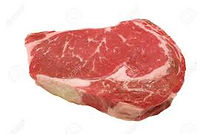
The ribeye steak seems to have been made to grill. Ribeyes come from the rib section of the cow. This cut is typically from the 6th to 12th rib and is cut either with or without the rib attached. Expect a highly marbled cut of meat with a large amount of fat in the middle seperating the two muscles that make up a ribeye a very rich, smooth texture and fine grain. The ribeyes characteristics allow it to handle high heat very well but may cause flare ups on the grill.
The Strip
The Tenderloin
The strip steak comes from the rear portion of the short loin section of the cow. The tight grains make strip steaks moderately tender. Expect good marbling. Strips are typically less robust than the before mentioned ribeyes, but lack the large pockets of fat. These characteristics make a strip very easy to cook.

The tenderloin, or, more commonly known as, the fillet is the most prized cut of meat on the entire cow. The tenderloin runs from the top sirloin section to around the middle of the short loin. Fillet is probably the tenderest of all the cuts with an extremely small grain, making it very smooth in texture. Although it is the most prized it is only because of its tenderness and not its flavor. Expect an extremely tender cut but less robust than other cuts.

GRILLING
There are many methods to grilling meat, but the following will outline cooking on a charcoal grill. The steps will be the same for a gas grill or other methods minus the difficulties in starting the fire and monitoring its temperature. With that said, grilling can be a difficult task even with the proper tools. But don't be discourages, grilling is a fun hobby that never gets old. Here are some simple steps and tools that might be useful on a warm or cold day, because every day is a good day to grill.
Tools of the Trade
-
A grill: preferably one that is sturdy and won't tip over while it's hot.
-
A fire chimney: tall metal cylinder ised to quickly light charcoal.
-
Wire brush
-
Charcoal
-
Newspaper: nor for reading while meat is on the grill!
-
Matches
-
Something to grill: preferably meat.
Lighting the Grill
1. Before starting, remove any excess ash leftover from previous uses by opening and closing the air-port on the bottom of the grill. Make sure to dump out the ash bin if it gets too full.
2. Pull out the top rack of the grill and set it aside. OKace the fire chimney in the center of the grill with 1 to 2 peices of crumpled up newspaper in the bottom compartment.
3. Put charcoal in the top compartment. The amount of charcoal depends upon how much food that is being grilled. This will become easier to guess as more experience is gained, but a good starting point would be half to three quarters full.
4. Strike up a match and light the newspaper. Coals will be hot in 5 to 10 minutes. A good judge of hot coals is when flames being to appear out of the top of the chimney.
TIP: If lighting the newspaper becomes difficult or doesnt burn enough to light the coals, try pouring 1 to 2 tablespoons of canola oil on the newspaper before lighting it.

Temperature Adjusting and Cleaning
5. Once the coals are nice and hot in the fire chimney, it is time to pour them into the bottom grate of the grill. Use a stick to push the coals to one half of the grill so that there will be a cooking side and a resting side.
CAUTION: Take care whenever maneuvering the coals or pouring them out of the fire chimney. Be mindful that the coals are extremely hot and can give off many embers around you when quickly moving them.
6. Place the top grate, which was removed prior to lighting the grill, back on and clean off any residue or burned bits that were accumulated during the previous use using a wire brush or some balled up newspaper.
Grilling
7. Now that the grill is hot, with a cookung and resting side, the cooking grate is clean, and ash has been removed, place meat evenly spaced on the cooking side. It is important to not overcrowd the grill because it causes a large flux in temperatures. It is important to keep a consistent temperature within the grill.
8. Continuosly monitor the meat by flipping it with tongs or a spatula every 1 to 2 minutes in order to achieve even cooking (for thicker cuts this should be longer). Because the coals will most likely not be laced evenly across the grill, there will be hot spots and meat should be rotated in and out of these.
TIP: A good judge of when to flip is when the fat on the hot side of the meat begins to sizzle. This meants that the hot side is roughly 130 degrees Fahrenheit to 140 degrees Fahrenheit (temperature when fat melts) which is, coincedentally, around the temperature you would like to achieve throughout the meat. If it is difficult to tell, an instant read infrared thermometer will help and can be found at many kitchen stores.
9. As the meat is cooking the temperature may need to be adjusted. To do this, open or close the bottom vent or place the lid on the grill and open or close the top vent. In general more air means hotter grill, so adjust vents accordingly.
10. A few minutes before the meat has completed, move it to the resting side for the remainder of the cooking. This doesn't "shock" the meat with a big temperature change which causes moisture to quickly leave.
